 Sentry
Selected News
Mobile Patrol Security Checklist for Commercial Properties
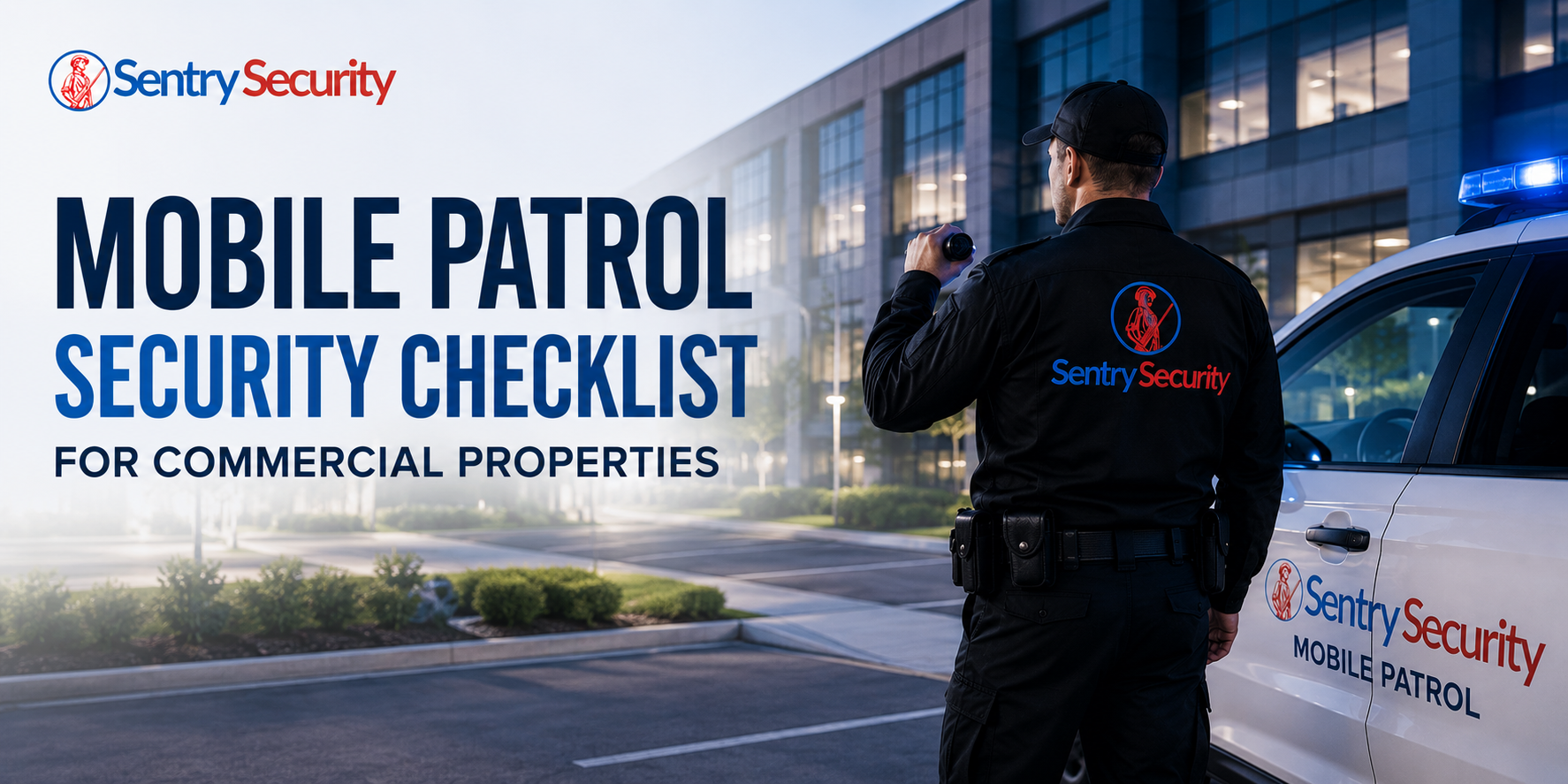
Commercial properties face security challenges every day, including unauthorized access, vandalism, theft, and suspicious activity. Security cameras and alarm systems play an important role, but they cannot physically inspect every corner of a property. That is why roving patrol security remains an important part of a complete security plan.
Mobile patrol officers conduct routine inspections across the property, checking key areas, identifying potential risks, and responding quickly to concerns. A well-planned patrol routine helps property owners maintain a safer environment for employees, tenants, and visitors.
Below is a practical checklist that can help commercial property managers get the most from their mobile patrol services.
1. Check All Entry and Exit Points
Doors, gates, loading docks, and emergency exits should be inspected during every patrol. Security officers should verify that:
- Doors are locked after business hours
- Gates are properly secured
- Windows show no signs of damage
- Emergency exits remain clear and accessible
- Access control systems are working correctly
Small issues such as an unlocked door or damaged lock can create opportunities for unauthorized access if left unnoticed.
2. Patrol Parking Lots and Outdoor Areas
Parking lots and exterior spaces are often the first places where suspicious activity occurs. A complete patrol should include:
- Parking areas
- Sidewalks and walkways
- Perimeter fencing
- Loading docks
- Storage yards
- Outdoor equipment
Regular inspections help strengthen commercial property security while creating a visible security presence throughout the property.
3. Watch for Suspicious Activity
Security officers should stay alert for anything that appears unusual or out of place.
Common observations include:
- Unauthorized individuals on the property
- Vehicles parked in restricted areas
- Signs of attempted break-ins
- Graffiti or vandalism
- Damaged locks or windows
- Unattended packages
Reporting these issues immediately allows property managers to take appropriate action before situations become more serious.
4. Inspect Exterior Lighting
Proper lighting plays an important role in reducing opportunities for criminal activity.
During each patrol, officers should check:
- Parking lot lights
- Building entrances
- Walkways
- Stairwells
- Emergency lighting
- Exterior floodlights
Any burned-out or damaged fixtures should be reported so they can be repaired promptly.
5. Verify Security Equipment
Physical patrols also provide an opportunity to inspect security systems across the property.
Officers should check the condition of:
- Alarm panels
- Surveillance cameras
- Motion detectors
- Access control readers
- Emergency communication systems
Combining security patrol services with electronic security systems creates stronger protection for commercial properties.
6. Document Every Patrol
Accurate documentation is one of the most valuable parts of a professional patrol service.
Each patrol report should include:
- Time of inspection
- Areas covered
- Security observations
- Maintenance concerns
- Any incidents reported
- Actions taken
Detailed reports help property managers identify recurring issues and maintain accurate security records.
7. Respond Quickly to Security Incidents
If an alarm is activated or suspicious activity is detected, patrol officers can respond immediately.
Depending on the situation, they may:
- Secure the affected area
- Contact emergency services
- Notify property management
- Assist employees or visitors
- Record important details for future reference
A rapid response can help minimize property damage and reduce safety risks.
8. Change Patrol Routes Regularly
Consistent security does not mean following the exact same route every day. Varying patrol schedules and inspection routes makes it more difficult for unauthorized individuals to predict officer movements.
Random patrol patterns also increase the chances of identifying unusual activity across different sections of the property.
9. Maintain Clear Communication
Good communication supports a successful security operation. Patrol officers should remain in regular contact with property managers and report concerns as soon as they arise.
Sharing updates about maintenance issues, suspicious behavior, or safety hazards allows problems to be addressed quickly while keeping everyone informed.
Choosing a Reliable Mobile Patrol Provider
The quality of a patrol program depends on the experience and professionalism of the security team. Commercial property owners should look for a provider that offers:
- Licensed and trained security officers
- Scheduled and random patrols
- Detailed incident reporting
- Fast response capabilities
- Reliable communication
- Experience protecting commercial properties
Professional mobile security patrols provide both visibility and accountability, helping businesses maintain a safer environment around the clock.
Final Thoughts
Protecting a commercial property requires more than cameras and alarms alone. Regular inspections, prompt reporting, and visible security patrols all contribute to a stronger security strategy. Roving patrol security helps property owners monitor vulnerable areas, identify potential risks early, and maintain a secure environment for employees, visitors, and valuable assets.
Protect Your Property with Professional Mobile Patrol Services
Looking for dependable mobile patrol protection for your commercial property? Sentry Security provides professional roving patrol services with trained officers, scheduled and random patrols, rapid response, and detailed reporting to help keep your property secure. Learn more about our services by contacting us today.